03 · Web
Websites and web applications, engineered rather than assembled.
Free first conversation · No obligation · You own the code
A website is a system, not a brochure
- 01
Speed is a requirement
Server rendering, optimised images, self-hosted fonts and minimal JavaScript, measured against a performance budget before launch.
- 02
SEO starts at the sitemap
URL structure, heading hierarchy, internal links and schema markup are designed with the information architecture, not bolted on.
- 03
Your team edits it
Pages, portfolio items, case studies, blog posts, FAQs and SEO fields are managed from a secure admin with roles.
- 04
Leads land in your database
Enquiries are stored, tracked through a pipeline and notified to the right person, not lost in an inbox.
What this covers
Company Websites
A website that looks good but loads slowly or can't be found is a liability.
- Information architecture
- Design and build
- Technical SEO
- CMS and admin
E-commerce
The storefront is half the job.
- Storefront
- Checkout and payments
- Order management
- Inventory
Web Applications
When a spreadsheet can no longer hold the rules, the data or the number of people using it, the next step is a web application: a proper database, proper permissions and an interface designed for the job..
- Data model and backend
- Application interface
- Integrations
- Deployment
Mobile Applications
Most business apps are a window onto a system: orders, jobs, bookings or accounts.
- Cross-platform apps
- Shared backend
- Offline-aware flows
Admin Panels
The admin panel is where your staff spend their day.
- Role-based access
- Content management
- Operational tooling
- Audit and history
Page builder or custom build?
| Criterion | Theme / page builder | Custom build (our default) |
|---|---|---|
| Speed | Heavy scripts and plugins; often slow on mobile | Only the code the page needs; fast by default |
| Editing | Flexible, but easy to break layout and consistency | Structured fields that keep design and SEO intact |
| Security | Plugin updates are a constant exposure | Small surface area, no third-party plugins |
| Fit | Good for simple brochure sites on a tight budget | Sites that need to rank, convert and connect to systems |
Recent websites
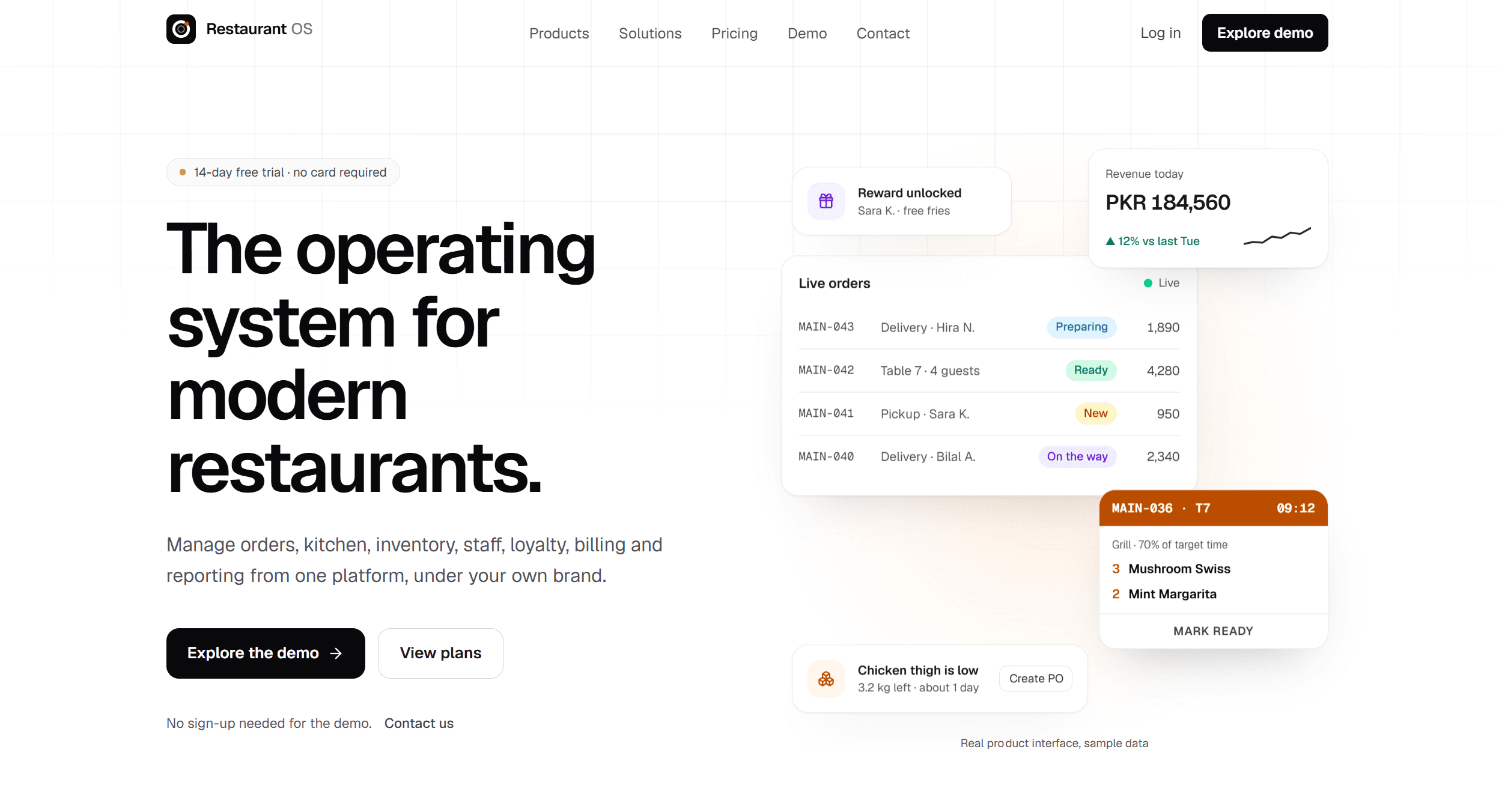
- 01Restaurant OSCompany website · Web platform
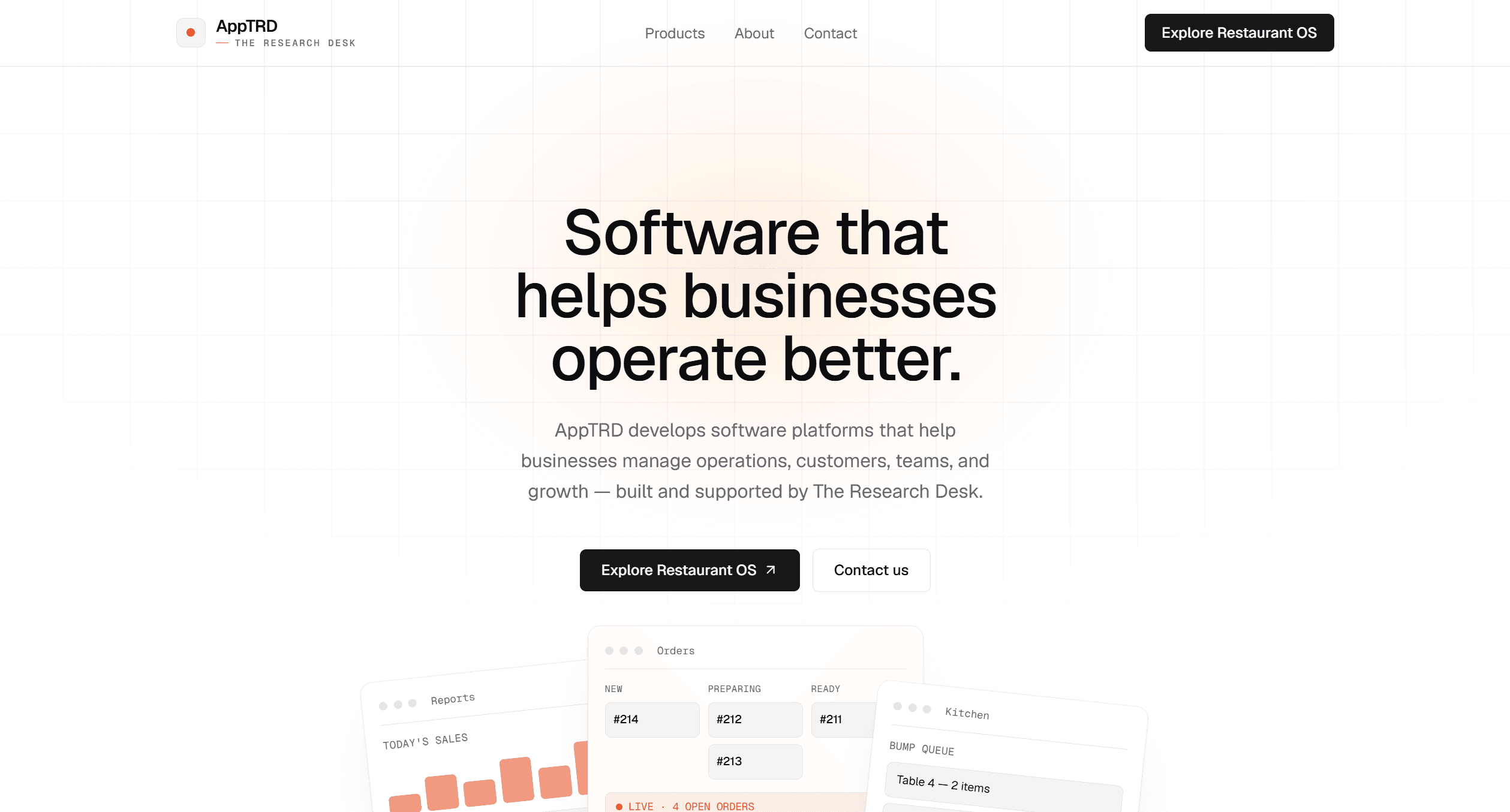
- 02AppTRDCompany website · Web platform
- 03Franko BeautyManufacturing & export — Company website

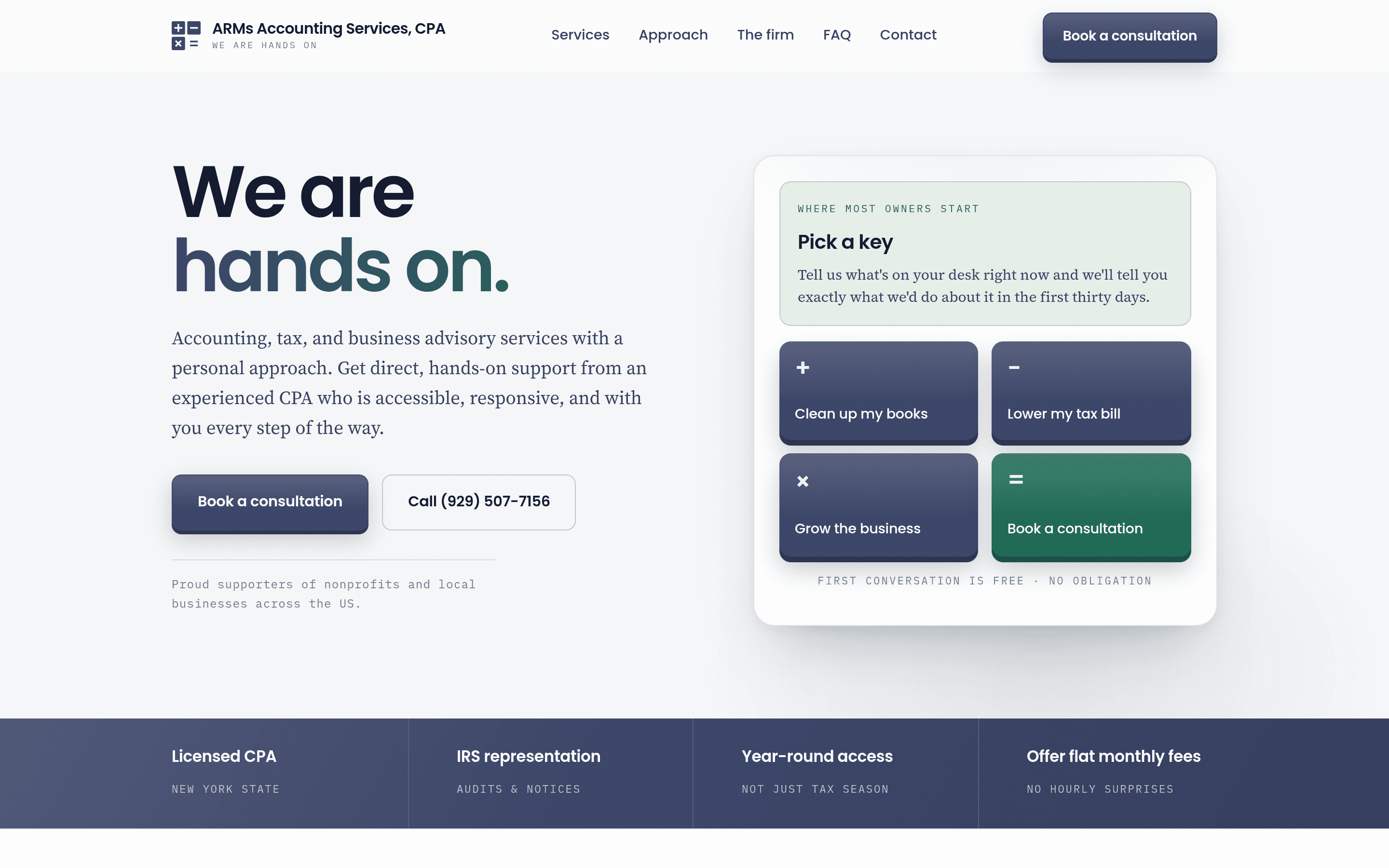
- 04ARMs Accounting Services, CPAProfessional services — Company website
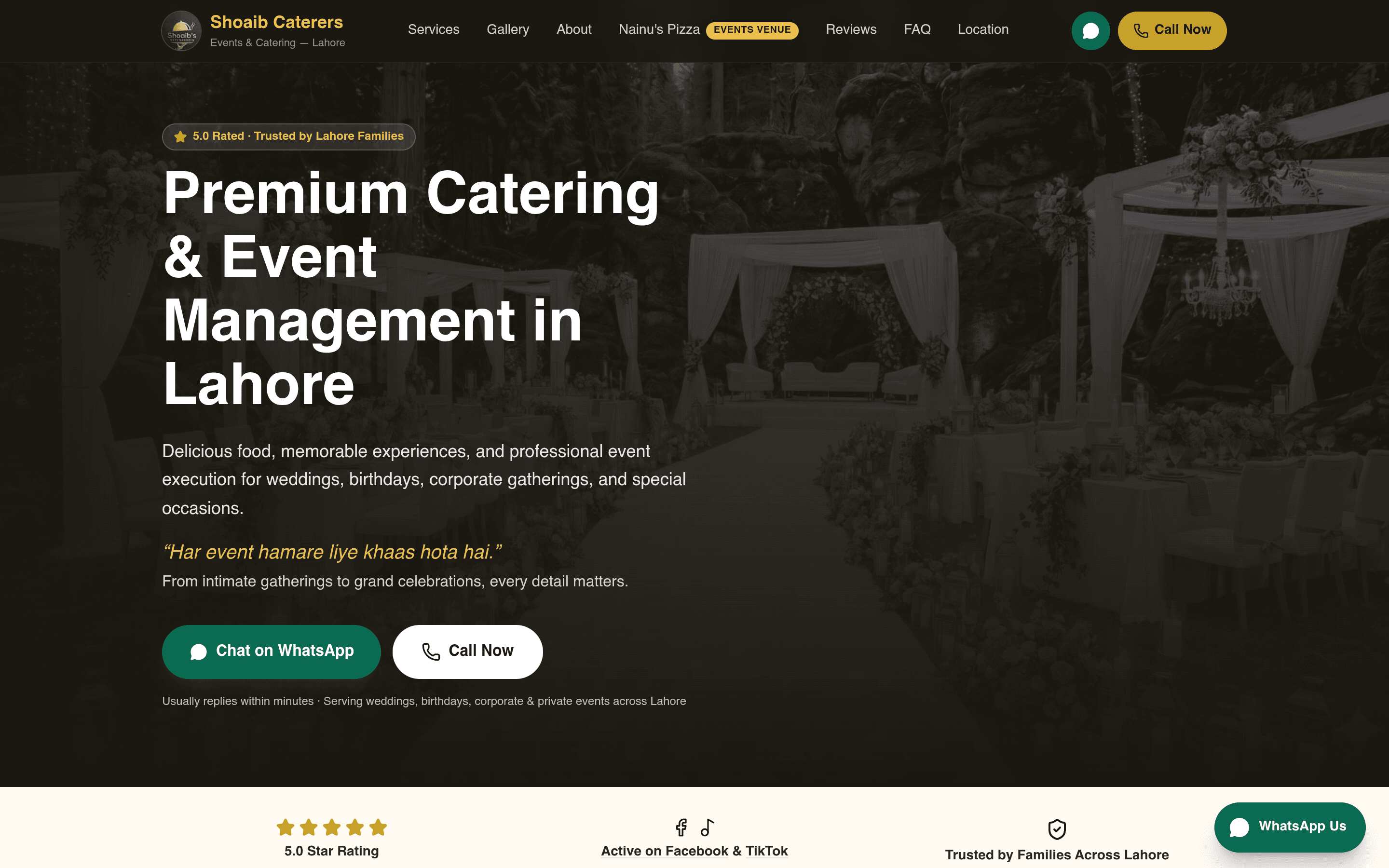
- 05Shoaib Caterers & Event ManagementEvents — Company website
From brief to handover
- 01Stage
Brief
You describe the problem in your own words: a form, an email or a call. We ask about the process, not just the feature list.
Written brief
- 02Stage
Study
We look at the real material: your sheets, current tools, sample data and the people involved. Most scope mistakes are avoided here.
Process map
- 03Stage
Scope
You receive fixed deliverables, a timeline and a price. Nothing is charged and no code is written until you approve it.
Scope & quotation
- 04Stage
Build
Work happens in stages with a link you can click through, not a status report. Changes are discussed against the scope, openly.
Staging link
- 05Stage
Handover
Source code, documentation and credentials in your accounts, plus a walkthrough for the people who'll use it.
Handover pack
Common questions
01What's the difference between a website and a web application?
A website mostly publishes information and captures enquiries. A web application lets signed-in users create and change data: orders, bookings, projects, accounts. Many of our builds are both: a public site with an application and admin behind it.
02Will we lose our Google rankings when the site is rebuilt?
Not if the migration is handled properly. We map every existing URL to its new equivalent with permanent redirects, keep what ranks, and resubmit the sitemap at launch.
03Where is the site hosted and who pays for it?
Hosting (typically Vercel) and the database (typically Supabase) are set up in your name. Small sites usually fit on free or low-cost tiers; we tell you the expected running cost before you approve the build.
04How long does a website take to build?
Most company websites take 2–4 weeks from approved scope to launch. E-commerce and web applications take longer; your scope states the timeline.
05Can we update the website ourselves?
Yes. Pages, case studies, portfolio items, blog posts, FAQs, images and SEO fields are edited from a secure admin panel, with roles for each team member.
06Will the site work well on phones?
Yes. Every page is designed and tested for mobile first, and checked for speed and accessibility before launch.
07Do you redesign existing websites?
Yes. We review what currently brings you traffic and enquiries, keep what works, redirect every old URL and rebuild the rest, to protect the rankings you already have.
08What does it cost to run afterwards?
Hosting, database and domain costs depend on the size of the site. Many company sites run on free or low-cost plans. We tell you the expected monthly cost before you approve the build.
Next step
Tell us what's slowing you down.
Share your current site or idea. We'll tell you what we'd keep, what we'd change and what the build would involve.
Free first conversation · No obligation · NDA on request